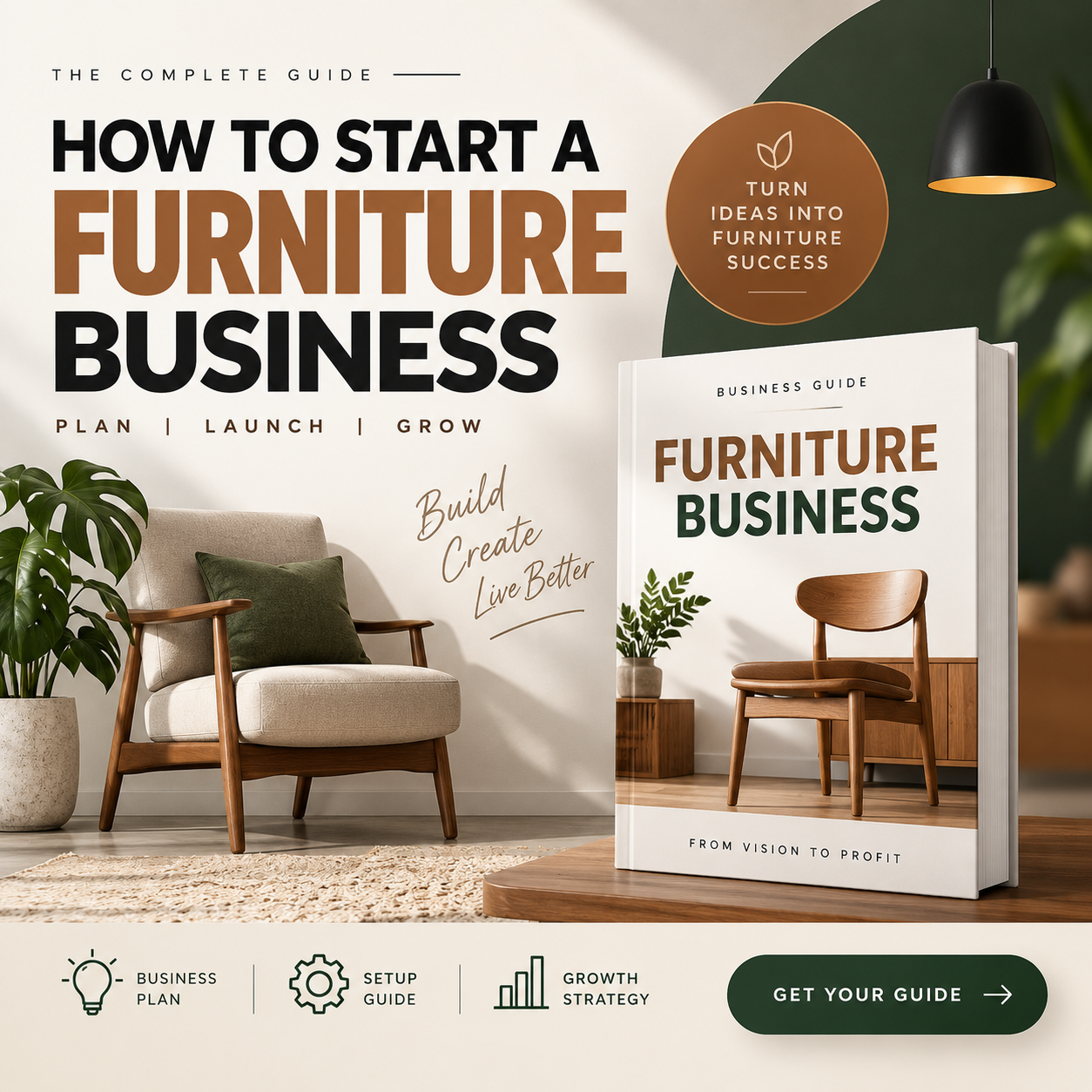
How to Start a Furniture Business Online - a step by step business plan for new and existing entrepreneurs.

Turn a furniture business idea into a practical ecommerce brand with a clear path from research to product selection, pricing, branding, launch and marketing.
This digital guide walks through a furniture ecommerce business concept using the Nigerian market as its working example.
Rather than stopping at inspiration, it demonstrates how to research demand, identify product opportunities and translate the findings into an actual business offer.
What’s Inside:
Market & Opportunity Research
Learn a structured approach to researching consumer demand, furniture trends, pricing, market size and local buying behaviour.
Product Research & Selection
See examples of mass-market and niche products, including desks, ergonomic chairs and related workspace products.
Costing & Pricing Examples
Understand how unit cost, advertising, packaging, storage and delivery can affect your numbers.
Customer Positioning
Follow an example customer profile built around remote and hybrid professionals, including demographics, needs, buying motivations and marketing channels.
Brand & Offer Development
Explore how to develop a brand identity and turn individual products into a compelling core offer.
Ecommerce & Social Media Setup
See how product imagery, video, reviews, USP graphics, social content and paid advertising can fit together in the launch strategy.
Designed for aspiring entrepreneurs, furniture enthusiasts, ecommerce founders, side hustlers and career changers who want a practical example of how a furniture business can be researched and structured from the ground up.
Instead of wondering “Where do I start?”, use this guide as a worked example of the decisions involved in developing a furniture ecommerce business - from finding an opportunity and understanding your customer to calculating costs, creating an offer and taking the business to market.
Start building your furniture business idea today.
Note: This is an educational business guide and worked example, not a guarantee of revenue, profitability or business results.
Figures, prices and market data shown in the guide reflect the examples and sources used in the report and may change over time.